The Freeze-Thaw Cycle: The Biggest Threat to Your Deck
Of all the ways winter degrades a deck, the freeze-thaw cycle does the most damage. Water is sneaky — it works its way into every small gap, check crack, and end grain on a wood deck. When that water freezes, it expands by about 9 percent in volume. That expansion exerts enormous outward pressure on the wood fibers surrounding it, forcing tiny fractures wider with each cycle.
In the Chicago suburbs, a single winter season can include 30 or more freeze-thaw events. Each one is another small episode of expansion and contraction. Over time, boards warp, split, and cup. Fasteners back out of their holes. Structural connections loosen. What started as hairline cracks in the surface becomes pathways for even more water penetration the following season.
Composite decking is more resistant to this process than pressure-treated lumber, but it’s not immune. Low-quality composite boards absorb moisture and can crack under severe freeze-thaw stress. Even premium composite products experience expansion and contraction, which is why proper gapping during installation matters so much in this climate.
How Snow and Ice Load Stresses Deck Structure
Snow is heavy. Fresh snow weighs roughly 20 pounds per cubic foot, and wet, dense snow can exceed 60 pounds per cubic foot. A deck covered with six inches of heavy, wet snow after a late-season storm carries a significant load — one that the framing, ledger connection, and footings all have to handle. Most well-built decks are engineered to handle this, but decks that were built with undersized joists, spaced too far apart, or attached improperly to the house face real risk under that kind of weight.
Ice is a compounding problem. When snow melts partially and refreezes, it creates dense ice sheets that concentrate weight in specific spots rather than distributing it evenly. Ice dams can also form where the deck meets the house, trapping water against the ledger board and flashing — exactly the spots where water intrusion causes the most structural harm.
If your deck was built more than 15 years ago and never had a structural inspection, a heavy-snow winter is a meaningful test. Pay attention to any new squeaking, bouncing, or visible sag after significant snowfall. Those are signs the framing is under more stress than it should be.
Deck Winter Damage Illinois Homeowners Often Miss
The obvious damage is easy to spot — split boards, rust stains from corroded fasteners, visible rot at post bases. But deck winter damage in Illinois often shows up in subtler ways that homeowners walk past every spring without recognizing for what they are.
Post movement is one. Footings that don’t extend below the frost line — which in Cook County is 42 inches — heave upward when the ground freezes and drops back down when it thaws. Repeat this enough seasons and the posts no longer sit level, the frame pulls away from the house, and the whole structure becomes unstable. Older decks, especially those built before stricter local codes, sometimes have footings that simply aren’t deep enough.
Ledger board deterioration is another hidden problem. The ledger is the board that connects your deck to your house, and it’s protected by flashing — a metal barrier that directs water away from the connection. If that flashing has failed or was installed incorrectly, winter moisture gets in behind the ledger and starts rotting the rim joist of your home. By the time you notice it, the damage often extends several feet into the house framing.
Safe Snow Removal: What to Use and What to Avoid
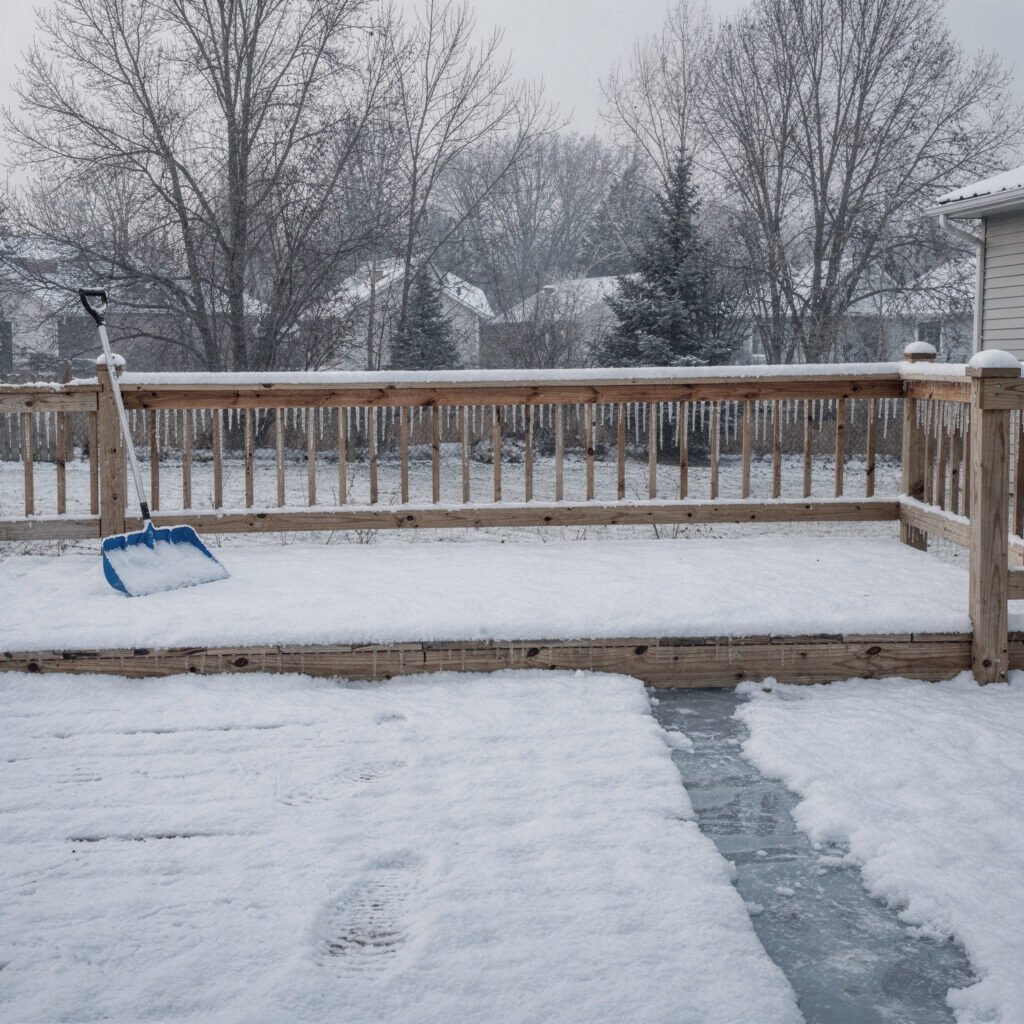
Removing snow from your deck matters, but how you do it matters just as much as whether you do it. Metal shovels scratch wood and composite surfaces and can chip brittle boards in cold weather. Use a plastic shovel with a rubber edge, and shovel with the grain — pushing parallel to the boards rather than scraping across them.
Never use rock salt on a wood or composite deck. Sodium chloride accelerates wood decay, corrodes metal fasteners, and damages composite surfaces. It also runs off into your landscaping and kills plants near the deck perimeter. Instead, use calcium chloride or magnesium chloride, both of which are less corrosive and work at lower temperatures. Sand or kitty litter work well for traction without any chemical risk at all.
Leave a thin layer of snow — an inch or so — as a buffer between your shovel and the decking surface. Trying to scrape the deck completely bare often does more damage than the snow itself would have. And avoid using ice chippers or metal scrapers on any surface, regardless of what the decking material is.
Pre-Winter Prep That Actually Makes a Difference
The single most effective thing you can do for a wood deck before winter is apply a water-repellent sealant in the fall. Sealed wood absorbs far less moisture, which directly limits freeze-thaw damage. The key is timing — the wood needs to be dry and above 50°F when you apply it, so early October is usually the window in the Chicago area. Waiting until the last week of October often means you’ve missed it.
Clean the deck surface thoroughly before sealing. Debris trapped between boards holds moisture against the wood all winter. Use a deck brush and appropriate cleaner to remove mildew, algae, and dirt, then let the surface dry completely before sealing. A pressure washer works well here, but keep the pressure moderate — high-pressure washing on soft or older wood fibers causes its own damage.
Inspect fasteners, railings, and post connections while the weather is still cooperative. Tighten any loose screws, look for signs of rust, and replace any fasteners that have started backing out. Stainless steel or coated screws are significantly more durable in this climate than standard zinc-plated hardware. According to the American Wood Council’s deck construction guidelines, proper fastener selection and placement are critical factors in long-term deck performance under cyclical weather stress.
Composite vs. Wood: Winter Performance Differences
Premium composite decking — products from brands like Trex, TimberTech, or Fiberon — handles Illinois winters significantly better than untreated or poorly maintained wood. The boards don’t absorb water the way wood does, they don’t crack or check from freeze-thaw cycling, and they don’t require annual sealing. That’s a real advantage for homeowners who want low maintenance alongside durability.
That said, composite decking still needs some attention in winter. The boards expand and contract with temperature swings, which is normal, but decks installed with insufficient spacing between boards can buckle when expansion has nowhere to go. Snow and ice removal practices are the same as with wood — plastic shovels, calcium chloride only, no metal tools. And composite decking can get slippery when wet or icy, so anti-slip strips near stairs and entry points are worth adding if you haven’t already.
If you’re weighing a deck replacement or a new build, the Chicago climate is a strong argument for choosing a quality composite product over pressure-treated lumber. The upfront cost is higher, but the maintenance savings and winter durability over a 25-year lifespan generally make composite the better investment for this region. The U.S. Department of Energy notes that moisture management in and around the home — including connected structures like decks — plays a meaningful role in long-term building performance and energy efficiency.
Post-Winter Inspection: What to Check Every Spring
Once temps stabilize above freezing and the deck has dried out, do a systematic walkthrough before you put furniture back out or start using the space. Walk every board and press down — any board that flexes significantly more than its neighbors is either rotting underneath or has lost its fastener connection. Mark those boards for replacement before the season starts.
Check the railing system carefully. Grab each section and push and pull firmly. Railings should have zero wobble. Any movement means a post connection has loosened or a post base has corroded. This isn’t a cosmetic issue — loose railings are a safety risk, especially on elevated decks.
Inspect the ledger connection from underneath if you can access it. Look for dark staining, soft wood, or visible rot at the point where the ledger meets the house band joist. If anything looks questionable, get a professional assessment before you use the deck. Ledger failures are one of the leading causes of deck collapses, and the damage is often invisible from above until it’s severe.
When Repair Isn’t Enough
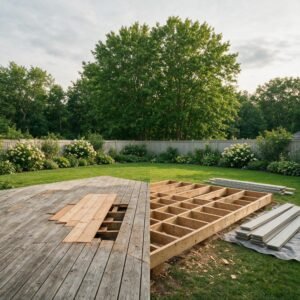
Some decks reach a point where the accumulated winter damage over many seasons makes repair impractical. If you’re replacing more than 30 percent of the decking boards, if the framing has rotted sections, or if the footings have moved enough to affect the level and stability of the structure, a full replacement is usually more cost-effective than a piecemeal repair approach.
A replacement also gives you the opportunity to correct problems that contributed to the damage — footings that weren’t deep enough, a ledger that was never properly flashed, framing lumber that was undersized for the span. Building a new deck the right way from the start is what gets you to 25 or 30 years of life instead of 12.
Illinois winters are hard on decks, and the damage tends to be slow and cumulative rather than dramatic and obvious. Freeze-thaw cycles crack and warp boards, snow loads stress the framing, and moisture that gets past the surface slowly degrades fasteners, posts, and ledger connections over time. Most of this damage is preventable with the right prep work in fall, careful snow removal through the winter, and a thorough inspection every spring.Wood decks need sealing, cleaning, and more frequent attention than composite products. Composite decks are more resilient in this climate, but they’re not maintenance-free — they still require proper snow removal and periodic inspection. No deck, regardless of material, benefits from neglect through a Chicago-area winter.If your deck is showing signs of age, accumulated damage, or structural concerns, addressing them before next winter is the smart move. The longer deferred maintenance sits, the more expensive it gets — and the more the rest of the structure is at risk. A solid deck that’s built and maintained well is an asset. One that’s been ignored through too many Illinois winters becomes a liability.