How Illinois Building Permits Actually Work
Illinois gives local governments — cities, villages, and townships — the authority to administer their own building codes. Most adopt the International Residential Code as a baseline, then layer on local amendments. The result is a patchwork of requirements that vary by municipality. A project that needs a permit in Schaumburg might be exempt in a neighboring village, or vice versa.
Your first move before any bathroom project is to contact your local building department and ask directly. Most suburban Cook County communities have this information posted online, and many have permit intake available digitally. Don’t rely on a neighbor’s experience or what a previous contractor told you — codes get updated, and local amendments change the picture.
In general, permit requirements apply when work involves structural changes, new electrical circuits, plumbing rough-in or relocation, mechanical ventilation, or anything that touches behind-the-wall systems. Cosmetic work — swapping fixtures, replacing a mirror, repainting — almost never requires a permit.
What Bathroom Work Typically Requires a Permit in Illinois
Plumbing work is the most common trigger. Moving a toilet, relocating drain lines, adding a new sink, or installing a freestanding tub with new supply connections all require a plumbing permit in virtually every Illinois municipality. These aren’t arbitrary rules — improperly vented drain lines cause sewer gas buildup, and the consequences range from unpleasant to dangerous.
Electrical work is equally regulated. Adding a new outlet, installing a dedicated circuit for a heated floor, replacing a standard switch with a GFCI outlet in a wet zone, or adding a bathroom exhaust fan connected to new wiring all require an electrical permit. Illinois follows the National Electrical Code (NEC), and GFCI protection within six feet of water sources is a hard requirement, not optional.
Structural modifications — removing a wall, enlarging a doorway for ADA access, or changing the bathroom footprint — require a building permit. So does converting a tub-only bathroom to a walk-in shower if it involves moving plumbing or altering the subfloor for a new drain location.
Work That Usually Doesn’t Require a Permit
Not every bathroom project triggers the permit process. Replacing a toilet with a same-location swap, installing a new vanity in the existing footprint, re-tiling a shower surround without touching plumbing, and swapping out light fixtures on an existing circuit are all typically permit-exempt in most Illinois communities.
That said, permit-exempt doesn’t mean code-exempt. The work still has to meet code standards. An unlicensed plumber doing a toilet swap incorrectly can cause a slow leak that rots a subfloor without anyone catching it until thousands of dollars in damage have built up. The permit process exists to create a checkpoint — but even without one, the underlying code applies.
Permit requirements may depend on whether the project involves relocating plumbing, making structural changes, or adding electrical components. If you’re planning a tub to shower conversion in Arlington Heights, a local specialist can help evaluate the scope of work before construction begins.
The Difference Between a Permit and a License
These two things are not the same, and confusing them creates problems. A permit is a project-specific approval from your local building department for a defined scope of work. A license is a credential held by a contractor or tradesperson that authorizes them to perform certain work in Illinois.
In Illinois, plumbers must be licensed by the state through the Illinois Department of Public Health. Electricians are licensed at the local level in most municipalities. When a licensed contractor pulls a permit on your project, they’re putting their license on the line — which is part of why reputable contractors insist on proper permitting. If something goes wrong on an unpermitted job, their liability exposure is significant.
Homeowners can pull permits for their own residences in many Illinois communities, but the inspection requirements remain the same. The work has to pass regardless of who submitted the paperwork.
Planning a bathroom remodel in Illinois?
We handle permits and inspections. Get a free estimate today.
Get a Free Estimate
What Happens During a Bathroom Remodel Inspection
The inspection process involves a building official visiting the site at defined stages of the project to verify code compliance before work gets covered up. For a bathroom remodel, there’s typically a rough-in inspection — before walls close — where the inspector checks drain slope, venting, electrical rough-in, and any structural framing. After everything passes, a final inspection happens once the room is complete.
Inspectors aren’t there to critique your tile pattern. They’re checking things like: is the drain properly sloped at one-quarter inch per foot? Is the exhaust fan vented to the exterior, not just into the attic? Are GFCI outlets installed within the required distance from water sources? Is the shower valve pressure-balanced to prevent scalding?
These aren’t trivial details. Ventilation that dumps moisture into an attic causes structural rot and mold. Improper drain slope creates chronic clogs. The inspection catches these problems before they become expensive repairs.
Permits and Home Resale: Why It Matters More Than You Think
Skipping a permit might feel harmless while you’re living in the house. The problem surfaces when you sell. Illinois real estate disclosure laws require sellers to disclose known material defects. Unpermitted work in a bathroom qualifies. When a buyer’s inspector finds evidence of unpermitted work — and experienced inspectors usually do — buyers either walk, negotiate a price reduction, or demand the seller retroactively permit and inspect the work.
Retroactive permitting is more complicated and more expensive than doing it right the first time. Some municipalities require opening walls so inspectors can see what was done. In the worst cases, work that doesn’t meet code has to be redone entirely.
How to Pull a Permit for a Bathroom Remodel in Illinois
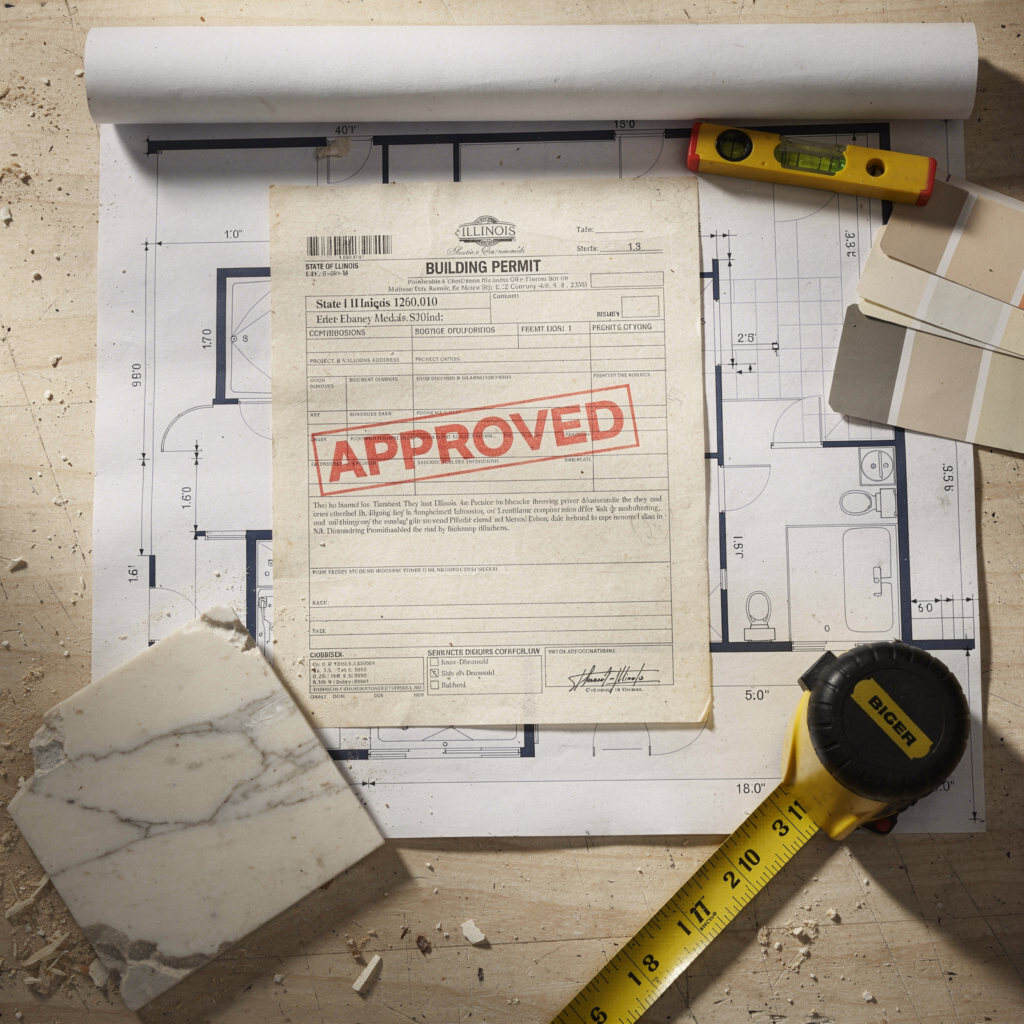
The process starts with your local building department. You’ll submit an application that describes the scope of work, along with any required drawings or plans. For a simple bathroom remodel, scaled floor plans showing the existing and proposed layouts are typically sufficient. More complex projects — structural changes, major plumbing relocations — may require stamped drawings from a licensed architect or engineer.
Permit fees in Illinois municipalities vary widely. In most Chicago suburbs, residential bathroom remodel permits run anywhere from $75 to a few hundred dollars depending on project valuation and scope. Some communities use a flat fee; others calculate based on a percentage of the estimated project cost. Call your building department for current fee schedules — they change periodically.
Most municipalities process standard residential permit applications within a few business days to a few weeks. Factor this into your project timeline. A good remodeling contractor handles permit applications as part of the project scope and coordinates inspection scheduling so the project moves forward without unnecessary delays.
What to Ask Your Contractor About Permits
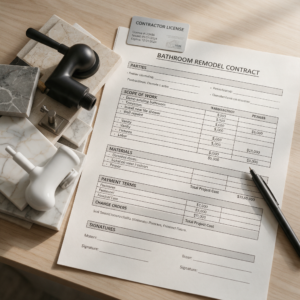
Before signing a contract for a bathroom remodel, ask your contractor directly whether the project requires permits and who will be responsible for pulling them. Any contractor who tells you permits aren’t necessary for scope that clearly requires them — or who suggests skipping permits to save time — is a red flag. Legitimate contractors in Illinois pull permits because it protects everyone involved.
Ask to see the permit once it’s issued. The permit should be posted on-site during the project. After the final inspection passes, ask for a copy of the inspection sign-off. Keep both documents with your home records. If you sell the house in five years, having this documentation is worth its weight in gold.
Getting a bathroom remodel permit in Illinois isn’t bureaucratic busywork — it’s a real protection layer for your home, your investment, and anyone who buys the property from you down the road. The specific requirements depend on your municipality and the scope of your project, but the general rule holds: if the work touches plumbing, electrical, structural elements, or ventilation, assume a permit is required and confirm with your local building department.The permit process also acts as a quality check. When a licensed contractor pulls permits and passes inspections, you have documented proof that the work meets Illinois code standards. That matters at resale, for insurance purposes, and simply for the peace of mind that comes with knowing the job was done right.If you’re still unsure whether your planned bathroom renovation requires a permit, call your village or city building department before work starts. Five minutes on the phone prevents months of problems. And if you’re working with a contractor, that conversation should happen before you sign anything.