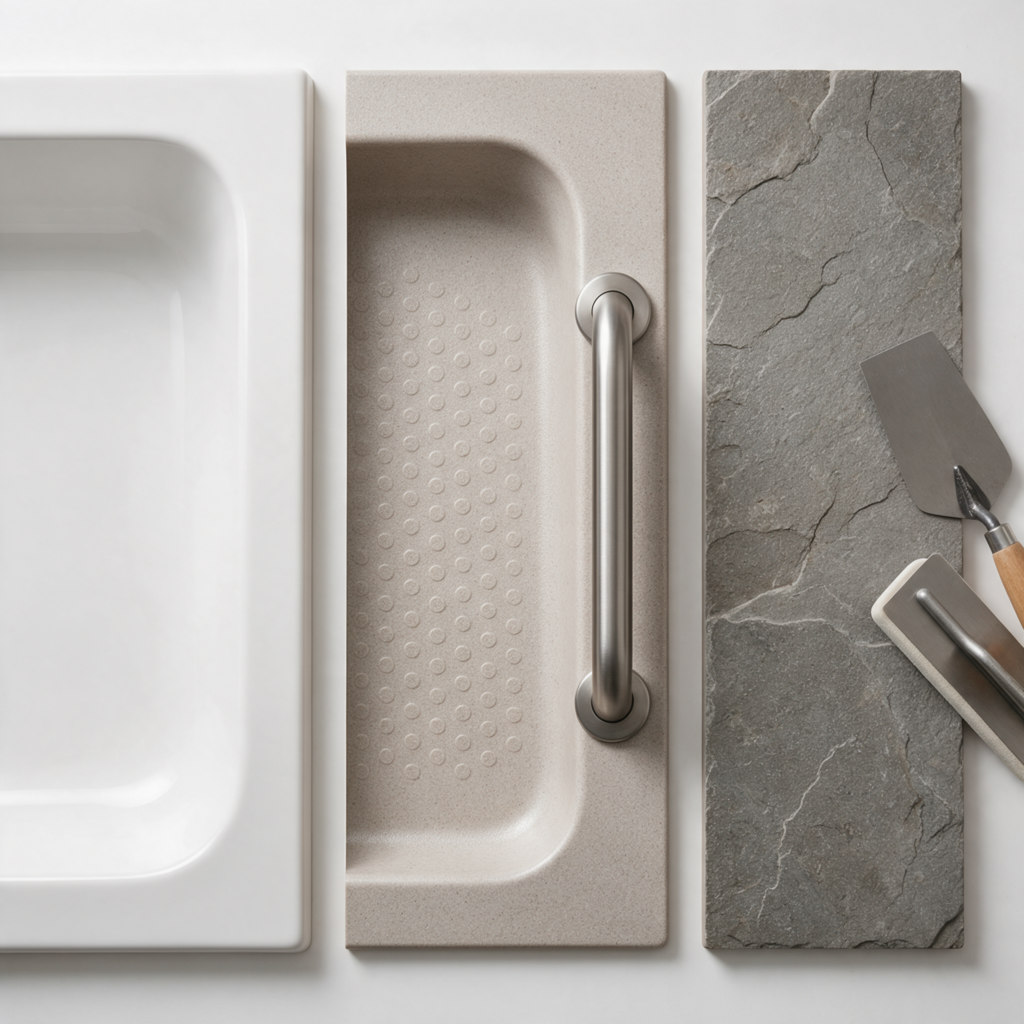
What Bath Fitter Actually Does
Bath Fitter is a liner company, not a remodeling company. That distinction matters more than most homeowners realize. The process involves measuring your existing tub and shower walls, then fabricating custom-fit acrylic shells that install directly over what’s already there. One layer on top of another. The pitch is speed — most jobs wrap up in a single day — and the results look clean and fresh without tearing anything out.
The price range for a Bath Fitter install typically runs between $3,000 and $8,500, depending on the size of the space, what fixtures are included, and which region you’re in. For cosmetic updates on a working bathroom with a structurally sound tub and walls, that’s a reasonable spend. You’re not getting a new bathroom — you’re getting a cosmetic layer over the old one.
The limitations are real and worth understanding upfront. Bath Fitter cannot change your layout, move plumbing, or address what’s happening underneath the surface. If there’s water damage, mold, or deteriorating subfloor beneath your current tub, the liner goes right over it. That problem doesn’t disappear — it hides. Consumer reviews compiled by ConsumerAffairs reflect this pattern, with recurring complaints about peeling seams, liner separation, and mold developing between the liner and the original surface over time.
Bath Fitter has also accumulated over 500 BBB complaints in the past three years, primarily around workmanship quality and high-pressure sales tactics during in-home consultations. That’s not a reason to dismiss the product entirely, but it is a reason to go in with realistic expectations and read the warranty terms carefully.
What Re-Bath Offers — and Where It Fits
Re-Bath operates as a broader franchise than Bath Fitter. They still work within a franchise model, which means you’re dealing with a locally-owned operator following a corporate system rather than an independent contractor who answers to you directly. But the scope of what they offer is wider. Re-Bath handles tub-to-shower conversions, walk-in tub installations, and accessibility-focused upgrades — not just liner overlays.
That broader service range comes with a correspondingly higher price. Depending on the project, a Re-Bath installation can run from roughly $8,000 into the $20,000+ range for more complex conversions. The quality of the outcome depends heavily on which franchise location you’re working with and who shows up to do the install. That variability is the core weakness of any franchise model.
Re-Bath is a better fit than Bath Fitter for homeowners who need a functional change — converting a tub to a roll-in shower, for example, or adding grab bars and a fold-down bench for aging-in-place needs. But even here, the franchise install model has structural limits. Re-Bath installers work with pre-manufactured components. They’re not building a custom tile shower or running new plumbing to relocate a fixture. If your project requires that level of work, you’re outside what any franchise bathroom company is designed to deliver.
What a Custom Bathroom Remodel Actually Involves
A custom remodel starts from scratch — or as far back as the project requires. A licensed contractor opens walls, addresses whatever is actually happening with your plumbing and waterproofing, and builds the bathroom you want rather than fitting prefabricated components into an existing shell. That means real layout changes are possible: moving the toilet, relocating the shower, expanding a vanity wall, or combining two cramped fixtures into one open wet area.
Waterproofing in a custom remodel is done to code. That’s not a small detail. Properly installed waterproofing membranes behind tile, correctly sloped shower floors, and code-compliant drain placement are what prevent the water damage that liner installs sometimes conceal. The work is inspected, documented, and done to last decades rather than years.
Cost varies widely based on scope. A mid-range bathroom remodel in the Chicago suburbs typically runs between $15,000 and $35,000, with higher-end projects going beyond that depending on materials and complexity. According to Remodeling Magazine’s 2024 Cost vs. Value Report, a midrange bathroom remodel recoups roughly 66% of its cost at resale — a meaningful return compared to cosmetic liner work, which adds little to appraised home value.
ADA-compliant bathrooms require a custom approach. Grab bar blocking needs to be installed in the wall framing, not just surface-mounted. A curbless shower requires the floor to be properly sloped and waterproofed from the subfloor up. Turn radius for wheelchair access requires layout planning. None of that is achievable through a liner or a franchise component install.
The Honest Case for a Liner Install
Bath Fitter and Re-Bath aren’t bad options in every situation. They exist for a reason, and when the conditions are right, they deliver fast results at a fraction of the cost of a full remodel.
A liner makes sense when the existing tub and wall substrate are in good structural shape — no soft spots, no signs of water intrusion, no cracked substrate behind the tile. It makes sense when the goal is purely cosmetic: you want the bathroom to look cleaner and more updated without changing anything about how it functions or where fixtures are located. It also makes sense when you’re working with a strict budget and timeline, or when you’re updating a secondary bathroom in a rental property where longevity is less critical than cost control.
The mistake is choosing a liner solution for a problem that requires more. If you’re smelling mildew, if the floor near the tub feels soft, if you’ve had a slow leak anywhere in that bathroom — those are signs that what’s underneath needs to be addressed, not covered. Installing a liner over water damage doesn’t fix it. It delays the reckoning and usually makes the eventual repair more expensive.
When to Choose a Custom Remodel Instead
A custom remodel is the right call any time the problem goes beyond cosmetics. If your bathroom has existing water damage, outdated plumbing, or a layout that simply doesn’t work for how you live, a liner won’t solve it. You need someone to open the wall and do the actual work.
Accessibility is another clear dividing line. If you or a family member is planning to age in place, or if you’re dealing with mobility limitations now, a true ADA-compliant bathroom requires structural decisions that franchise installs can’t make. Blocking in the walls for grab bars, building a zero-threshold shower floor, widening the doorway — those are construction decisions, not product selections from a catalog.
A custom remodel also makes sense when you want the bathroom to reflect your home’s quality and your own taste. Pre-manufactured acrylic shells have a particular look. They’re uniform, limited in finish options, and clearly identifiable as liner products to anyone paying attention. Custom tile work, a freestanding tub, a double vanity with real cabinetry — those outcomes require a skilled contractor, not a franchise sales model.
The Accountability Difference
One underappreciated factor in the Bath Fitter vs Re-Bath vs custom bathroom remodel decision is who you’re actually dealing with. Franchise companies operate through a corporate-to-franchisee structure. Your install crew works for a local franchisee, who operates under a brand umbrella but isn’t necessarily your neighbor or someone who built a reputation in your specific market over decades.
A local licensed contractor is directly accountable to you and to the licensing board that governs their work. In Illinois, that means the contractor carries proper licensing, pulls the required permits, and has inspectors sign off on structural and plumbing work. If something goes wrong six months later, you’re dealing with a real person who has a business reputation in your community — not navigating a corporate complaint process with a national franchise.
That local accountability matters more than most homeowners anticipate until something goes wrong. Permits also matter for resale. Unpermitted bathroom work raises red flags during home inspections and can complicate a sale. Custom remodels done by licensed contractors come with a paper trail that protects you long after the job is finished.
A Side-by-Side Summary
- Bath Fitter: Acrylic liner over existing tub and walls. Fast, low-disruption, cosmetic only. $3,000–$8,500. No layout changes, no structural work. Best for cosmetic updates on structurally sound bathrooms.
- Re-Bath: Franchise model with broader scope — conversions, walk-in tubs, accessibility components. $8,000–$20,000+. Pre-manufactured components, quality varies by location. Better than Bath Fitter for functional changes, still not a true custom build.
- Custom Remodel: Full-scope construction by a licensed contractor. $15,000–$35,000+ depending on scope. Real layout changes, code-compliant waterproofing, ADA-compliant options, permit documentation. Best for structural issues, accessibility needs, or homeowners who want lasting quality.
The right choice depends entirely on what your bathroom actually needs — not which option has the most compelling TV commercial. If your bathroom is structurally sound and you want a cosmetic refresh on a budget, a liner product from Bath Fitter or a basic Re-Bath install isn’t automatically a bad idea. Go in with clear expectations, read the warranty, and make sure there’s no water damage hiding underneath before you sign.If your project involves anything structural — water damage, plumbing changes, layout adjustments, or real accessibility requirements — a liner will not get you there. A custom remodel done by a licensed local contractor is the only path to that outcome, and the investment reflects that. The work is built to code, inspected, and built to last.The Bath Fitter vs Re-Bath vs custom bathroom remodel question ultimately comes down to depth of problem versus depth of solution. Match those correctly and you’ll spend money once. Get it wrong and you’ll spend it twice.