Why Bathrooms Are Ground Zero for Hidden Water Damage
Bathrooms concentrate more moisture than any other room in the house. Every shower, every bath, every time someone runs the faucet creates humidity. Over time, that moisture finds its way through grout lines, around caulk seams, behind tile, and into the building materials underneath. The problem isn’t a single catastrophic event — it’s slow, steady infiltration over years.
Older homes in the Chicago suburbs often have bathrooms that were tiled directly onto drywall, or even plaster, without a proper moisture barrier behind them. That worked fine for a while, but it was never designed to hold up for 30 or 40 years. By the time you’re scheduling a remodel, the wall assembly behind your shower has often been absorbing moisture for a decade or more.
Poor ventilation makes it worse. A bathroom exhaust fan that vents into the attic instead of outside, or a fan that’s undersized for the room, leaves residual humidity sitting against surfaces long after you’ve dried off and left. That consistent dampness is exactly what mold and rot need to take hold.
The Most Common Types of Bathroom Water Damage We Uncover
Rotted framing is the finding that changes a project scope the most. When water gets behind tile and sits against wood studs or top plates, those members start to soften. We’ve pulled tile in shower surrounds and found studs that have completely lost their structural integrity — not just surface rot, but full-depth decay that requires sister framing or full replacement before any new finish material goes up.
Subfloor damage is almost as common, especially around the toilet flange and tub perimeter. A slow wax ring leak or a tub surround that wasn’t properly caulted at the floor line feeds water directly into the subfloor over time. By the time the floor feels soft underfoot, the damage extends well beyond what you can see from above. We regularly cut out sections of plywood subfloor and find the joists beneath also showing signs of moisture damage.
Mold growth inside wall cavities is the third major finding. It’s not always visible from the demo side — sometimes it’s on the back face of drywall, on the insulation behind it, or on the framing itself. The CDC’s guidance on indoor mold makes clear that mold inside wall cavities requires complete removal and remediation, not just surface treatment. Painting over it or covering it with new material is not an acceptable fix.
Reading the Warning Signs Before Demo Starts
Some water damage announces itself. A soft spot in the floor near the toilet base, tile that sounds hollow when tapped, grout lines that keep separating, or a musty smell that lingers even after cleaning — these are all signs that something is wrong beneath the surface. None of them are cosmetic issues you can tile over.
Staining on the ceiling below a second-floor bathroom is one of the clearest warning signs. That stain represents water that has already traveled through the floor assembly and into the framing between floors. By the time it shows up on a ceiling, the damage above it is usually significant.
Peeling paint on the bathroom ceiling, persistent condensation on walls that aren’t near a window, and cabinet bases that feel swollen or soft near the floor — all of these point to moisture that’s been present long enough to affect building materials. When a homeowner describes these symptoms during an initial consultation, we build scope flexibility into the estimate from the start.
How Water Gets Behind Tile in the First Place
Grout is not waterproof. It never has been. Grout is a cementitious material that absorbs water unless it’s sealed — and even sealed grout needs to be resealed regularly. In a shower that gets daily use, grout that wasn’t sealed, or was sealed once years ago and never maintained, is actively channeling water behind the tile every single day.
Caulk joints at the tub-to-wall seam, at inside corners, and at the floor line are the other major entry points. Caulk shrinks, cracks, and separates over time — especially in a bathroom where the structure experiences movement from temperature swings and foot traffic. A hairline gap in the caulk at the tub deck is a direct path for water to get behind the surround and sit against the framing and subfloor.
Shower niches and built-in shelving are surprisingly common failure points. If a niche wasn’t properly sloped and waterproofed during installation, water pools inside it and migrates through the back wall. We’ve cut open niches that looked fine from the front and found significant mold growth on the framing directly behind them.
What Happens to Scope and Budget When We Find Damage
This is the part most homeowners are understandably nervous about. Finding hidden damage does change the scope of a project — there’s no way around that. But the good news is that addressing it properly during a remodel is dramatically less expensive than discovering it later when it’s caused structural failure or a full-blown mold remediation situation.
Rotted framing typically adds labor and material cost for sistering or replacing affected studs. Subfloor repairs involve cutting out damaged sections and patching with new plywood, which also requires reinstalling the floor transition details. Mold remediation, if the infestation is significant, may require a certified remediation contractor before the remodel work continues. Each of these scenarios adds time and cost, but they’re necessary — not optional.
The scope additions we find most often are manageable when caught early. A bathroom remodel that uncovers one or two rotted studs and a small subfloor section near the toilet is a different situation than one where the entire shower wall framing has deteriorated. That’s why honest communication at the point of discovery matters as much as the repair itself. We walk homeowners through exactly what we found, show them the damage directly, and explain what the repair involves before any additional work begins.
How Modern Waterproofing Prevents This From Happening Again
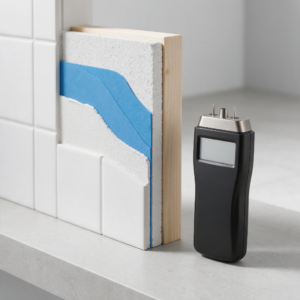
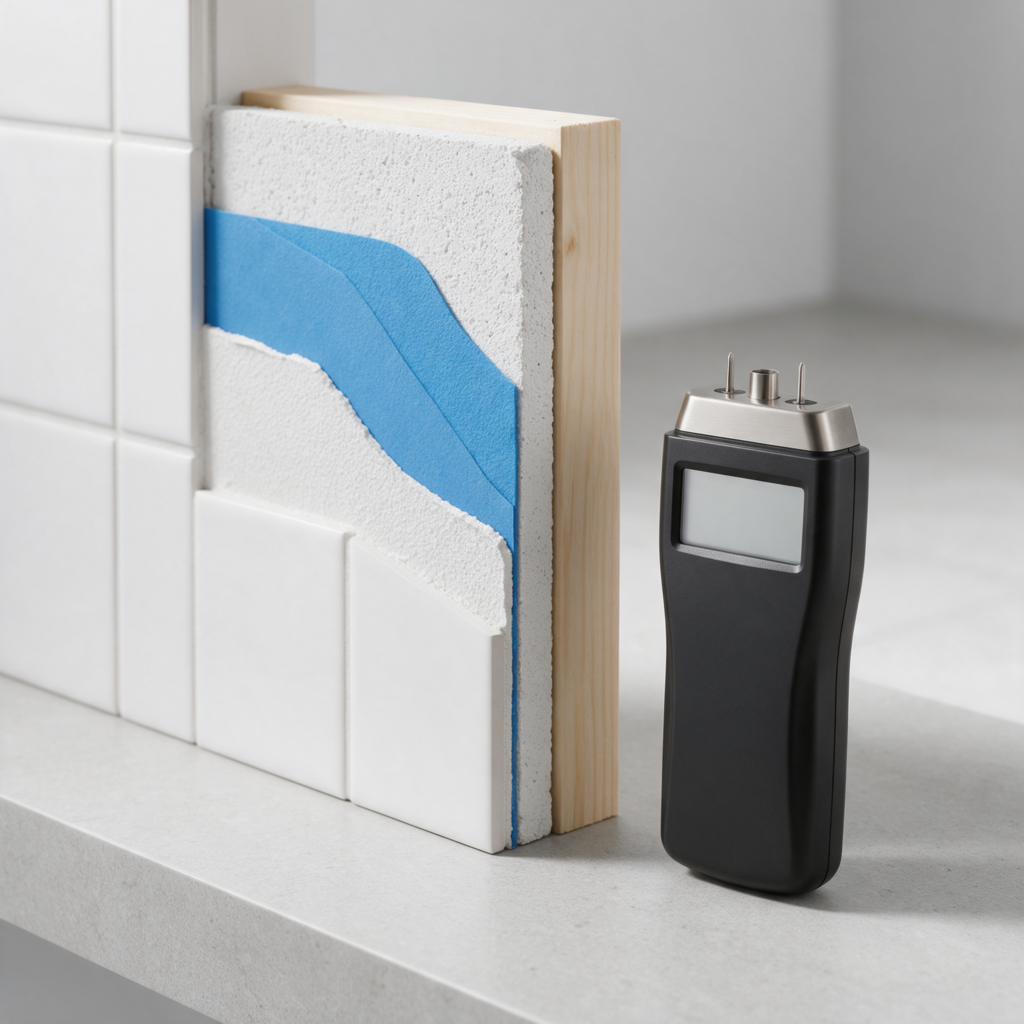
The standard for shower waterproofing has changed significantly over the past decade. Schluter Kerdi, RedGard, and similar sheet membrane or liquid-applied waterproofing systems create a true moisture barrier behind tile — not just a water-resistant layer, but a fully waterproof one. When installed correctly, these systems prevent water from ever reaching the framing and substrate below.
Proper cementitious backer board, like Durock or HardieBacker, replaces regular drywall in wet areas. Unlike drywall, these products don’t support mold growth and don’t lose structural integrity when exposed to moisture over time. Using them throughout the shower and tub surround, not just in the immediate wet zone, is standard practice on every project we do.
Cement board alone isn’t enough — the waterproofing membrane has to be installed over it, with seams and corners properly embedded in fabric tape and waterproofing compound. The niche interiors need to be waterproofed. The curb needs to be waterproofed. Schluter’s installation standards for their Kerdi system reflect the level of detail that separates a bathroom that holds up for 20 years from one that starts failing in five.
What to Ask Your Contractor Before Work Begins
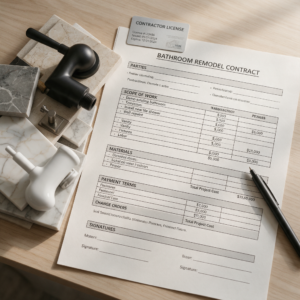
Before you sign a contract for a bathroom remodel, ask specifically how the contractor handles unexpected water damage. A vague answer — or a promise that they won’t find anything — is a red flag. Any experienced contractor who has remodeled more than a handful of bathrooms has found hidden damage. The question is whether they handle it transparently and correctly.
Ask what waterproofing system they use and where it gets applied. Ask whether they use cement backer board throughout the wet area or just behind the tile. Ask what happens to your project timeline and cost if they find rotted framing or subfloor damage. These aren’t hostile questions — they’re reasonable due diligence, and a good contractor will answer them directly.
Also ask about permits. Structural repairs, including framing replacement, require permits in most municipalities across Cook County. A contractor who suggests skipping the permit process to avoid revealing the scope of repairs is not someone you want working on your home.
Bathroom water damage is one of those problems that gets worse the longer it goes unaddressed. The moisture that’s already behind your walls doesn’t stop working just because you can’t see it. Every year that passes without addressing it means more framing affected, more subfloor compromised, and more opportunity for mold to establish itself deeper into the wall assembly.The silver lining is that a remodel is the right time to deal with it. When the walls are already open and the fixtures are already out, addressing damage is a fraction of the cost it would be as a standalone repair project. Homeowners who try to defer the remodel to avoid the expense often end up spending far more when the damage forces an emergency repair.Going into a remodel with realistic expectations about what might be found — and working with a contractor who handles those findings honestly — is the best way to protect both your budget and your home. The goal isn’t a perfect, no-surprises project. The goal is a finished bathroom that’s built correctly, on materials that are sound, and will hold up for the next 20 years.