Aging in place is no longer just a trend—it’s a growing priority for millions of homeowners who want to remain independent, comfortable, and safe in their own homes. According to AARP, nearly 90% of adults aged 65 and older prefer to stay in their current home as they age, highlighting a major shift in how people approach long-term living.
However, as mobility changes over time, certain areas of the home can become more challenging—and even dangerous. The bathroom, in particular, is one of the highest-risk spaces due to slippery surfaces, tight layouts, and daily use. In fact, the CDC reports that falls are the leading cause of injury among older adults, with bathrooms being a common location for these incidents.
The good news is that strategic bathroom modifications can dramatically improve safety and usability without sacrificing style. Whether you’re planning ahead or adapting your home to current needs, the right upgrades can make a lasting difference.
Why Bathroom Modifications Are Essential for Aging in Place
Bathrooms are used multiple times a day, making them one of the most important spaces to adapt for aging in place. Even minor design limitations—such as a high bathtub wall or lack of support—can increase the risk of falls and injuries.
According to the CDC, one in four adults aged 65+ falls each year, resulting in over 3 million emergency department visits annually. These numbers highlight the importance of preventative design. By making targeted modifications, homeowners can significantly reduce risks while maintaining independence and confidence in their daily routines.
Walk-In Showers: A Safer Alternative to Traditional Tubs
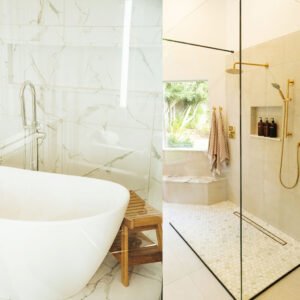
One of the most impactful upgrades is replacing a traditional bathtub with a walk-in or curbless shower. Stepping over a high tub wall can be difficult and dangerous, especially for individuals with limited mobility or balance issues.
Walk-in showers eliminate this barrier, creating a seamless entry that reduces the risk of tripping. Many designs also include built-in seating and handheld showerheads, making bathing more comfortable and accessible.
Modern walk-in showers are not only functional but also highly desirable in today’s housing market, adding both safety and resale value to the home.
Grab Bars: Small Addition, Big Impact
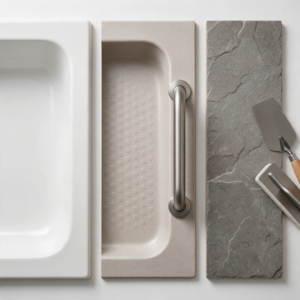
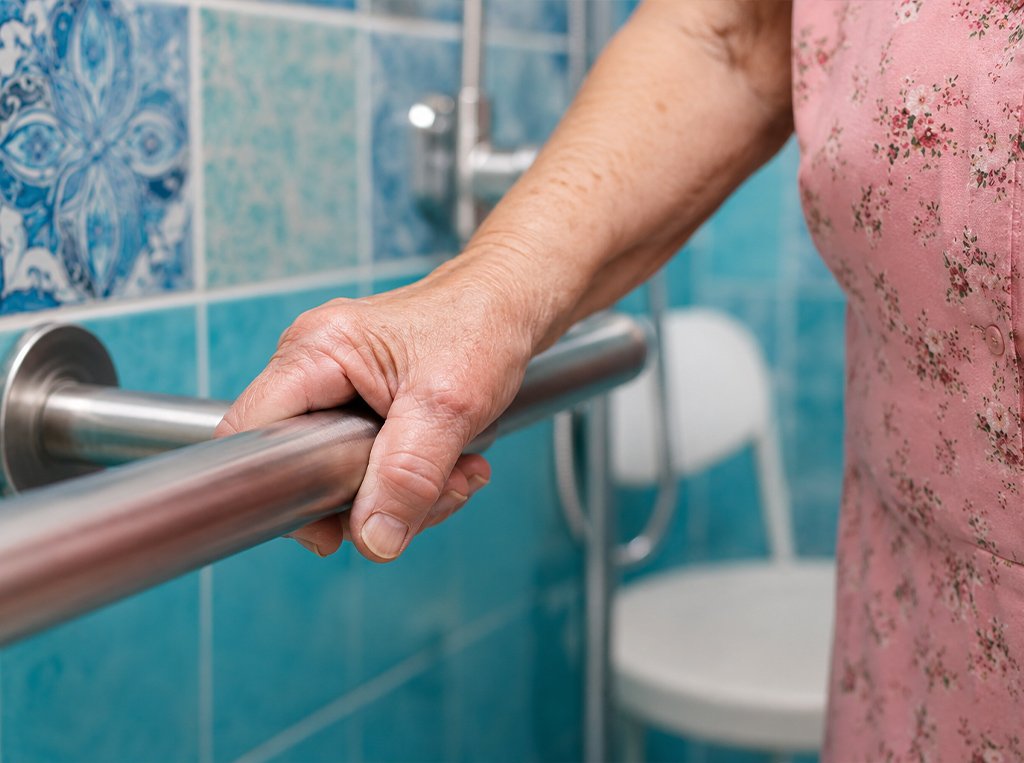
Grab bars are one of the simplest and most effective safety features you can add to a bathroom. When installed correctly near toilets, showers, and bathtubs, they provide essential support and stability.
Research from the National Institute on Aging shows that properly installed grab bars can significantly reduce the likelihood of falls in high-risk areas. They are designed to support substantial weight and can be integrated into the bathroom design in a way that feels modern rather than clinical.
Despite their effectiveness, many homes still lack this basic feature, making it one of the most important upgrades to consider.
Non-Slip Flooring: Reducing One of the Biggest Risks
Slippery surfaces are one of the primary causes of bathroom accidents. Wet tile floors can become hazardous, especially for older adults or individuals with mobility challenges.
Installing non-slip flooring materials, such as textured tile or slip-resistant vinyl, can greatly improve traction and reduce fall risk. Even smaller upgrades, like adding anti-slip coatings or bath mats, can make a noticeable difference.
The National Floor Safety Institute estimates that slips and falls account for over 1 million hospital emergency room visits each year, emphasizing the importance of safer flooring solutions.
Comfort-Height Toilets for Easier Use
Standard toilets can be difficult to use for individuals with joint pain, limited mobility, or balance issues. Comfort-height toilets, which are typically 17 to 19 inches tall, make sitting down and standing up much easier.
This small adjustment can significantly improve daily comfort and reduce strain on the knees and back. When paired with grab bars, comfort-height toilets create a much safer and more accessible bathroom experience.
Improved Lighting for Visibility and Safety
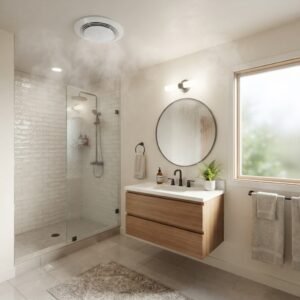
Lighting plays a critical role in bathroom safety, especially as vision changes with age. Poor lighting can make it difficult to see hazards, increasing the risk of accidents.
Upgrading to brighter, well-distributed lighting can improve visibility throughout the space. Motion-sensor lights and night lighting are especially useful for nighttime bathroom visits, helping prevent falls in low-light conditions.
The American Academy of Ophthalmology notes that aging eyes require significantly more light to see clearly, making proper illumination an essential part of aging-in-place design.
Wider Doorways and Better Layouts
Accessibility isn’t just about fixtures—it’s also about how the space is designed. Narrow doorways and tight layouts can limit mobility and make it difficult to use assistive devices if needed.
Widening doorways and creating more open layouts can improve movement and usability. Even if mobility devices are not currently needed, planning for future accessibility ensures the bathroom remains functional over time.
Cost of Bathroom Modifications for Aging in Place
The cost of bathroom modifications can vary depending on the scope of the project. Smaller upgrades, such as grab bars, lighting improvements, and non-slip flooring, can cost a few hundred to a few thousand dollars. Larger renovations, including walk-in showers or full bathroom remodels, can range from $10,000 to $30,000 or more.
While the upfront investment may seem significant, it is often far more cost-effective than dealing with medical expenses or relocating to assisted living. Additionally, accessible upgrades can increase home value and appeal to a broader range of buyers.
Common Mistakes to Avoid
When planning bathroom modifications, it’s important to avoid common pitfalls. One of the biggest mistakes is focusing only on aesthetics while overlooking functionality. While design is important, safety should always come first.
Another common issue is improper installation of safety features, such as grab bars that are not securely anchored. Layout mistakes, like insufficient space or poorly placed fixtures, can also reduce the effectiveness of the upgrades.
Working with experienced professionals can help ensure that modifications are both safe and compliant with best practices.
Conclusion
Aging in place is about more than staying in your home—it’s about maintaining independence, comfort, and quality of life. The bathroom, as one of the most frequently used and potentially hazardous spaces, should be a top priority when planning for the future.
Simple upgrades like grab bars, non-slip flooring, and improved lighting can make an immediate impact, while larger changes like walk-in showers and layout adjustments provide long-term benefits. With the right modifications, homeowners can create a bathroom that is not only safer but also more functional and enjoyable to use.
Investing in these changes today can help ensure a safer, more confident tomorrow—allowing you or your loved ones to truly age in place with peace of mind.