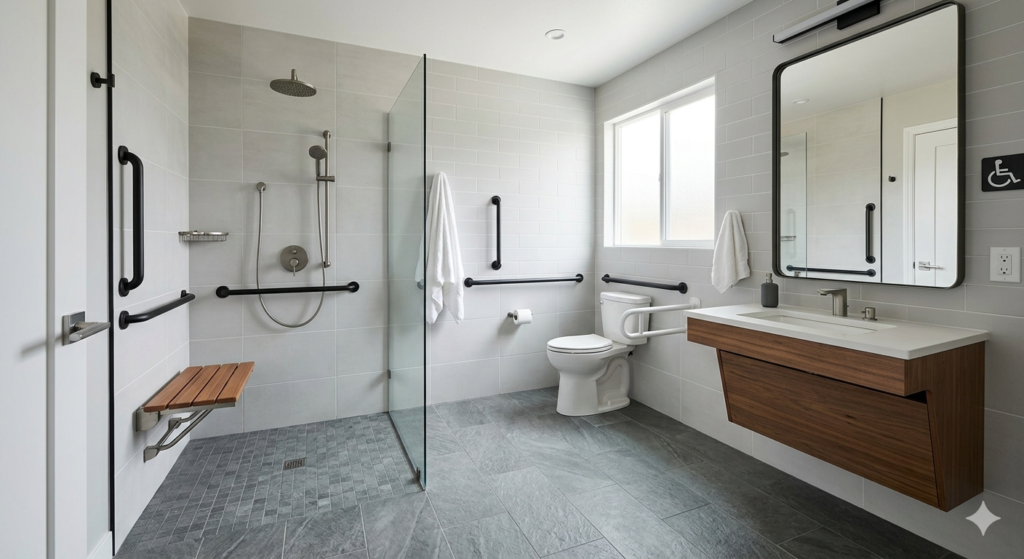
An ADA bathroom remodel is one of the most valuable home improvements you can make if safety, accessibility, and long-term comfort are priorities. Whether you’re planning for aging in place, accommodating a family member with mobility challenges, or simply creating a more functional bathroom, incorporating ADA-inspired design principles can dramatically improve daily life.
According to the Centers for Disease Control and Prevention (CDC), more than 61 million adults in the United States live with a disability, representing nearly one in four Americans. Additionally, falls remain the leading cause of injury among adults aged 65 and older, with many of these accidents occurring in bathrooms due to slippery surfaces, limited maneuvering space, and difficult-to-access fixtures.
While the Americans with Disabilities Act (ADA) primarily applies to commercial and public facilities, many homeowners choose to follow ADA guidelines during bathroom renovations because they provide proven standards for safety and accessibility. Features such as walk-in showers, grab bars, wider doorways, and wheelchair-friendly layouts can make a bathroom easier to use for people of all ages and abilities.
In this guide, we’ll explore ADA bathroom requirements, accessibility features, grab bar installation guidelines, wheelchair-friendly design considerations, aging-in-place modifications, remodeling costs, and the benefits of investing in an accessible bathroom.
What Is an ADA Bathroom Remodel?
An ADA bathroom remodel involves modifying a bathroom to improve accessibility and usability for individuals with mobility limitations, disabilities, or age-related challenges. These renovations are often based on ADA standards, which establish guidelines for clearances, fixture heights, and accessible design.
Although residential homes are generally not legally required to comply with ADA regulations, many homeowners use these standards as a blueprint for creating safer and more functional spaces. ADA-inspired bathroom remodeling is particularly popular among seniors planning to age in place, individuals recovering from injuries, wheelchair users, and families caring for loved ones with mobility limitations.
The goal is simple: create a bathroom that can be used comfortably, safely, and independently by as many people as possible.
ADA Bathroom Requirements Every Homeowner Should Know
One of the most important aspects of an ADA bathroom remodel is ensuring there is enough space for movement and accessibility.
Doorways should provide a minimum clear opening of 32 inches to accommodate wheelchairs and mobility devices. Many remodeling professionals recommend installing 36-inch doors whenever possible to provide additional clearance and future flexibility.
The bathroom should also provide adequate maneuvering space. ADA guidelines recommend a clear turning radius of at least 60 inches, allowing wheelchair users to rotate comfortably within the room. This often requires careful planning of fixture placement and overall layout.
Toilets should be installed at a height between 17 and 19 inches from the finished floor, making it easier for users to sit down and stand up. There should also be sufficient clearance around the toilet to allow wheelchair transfers and caregiver assistance if needed.
Accessible sinks and vanities should be no higher than 34 inches and provide adequate knee clearance underneath. Faucets should be easy to operate with one hand and should not require tight grasping, pinching, or twisting.
These requirements may seem minor individually, but together they create a significantly safer and more accessible environment.
ADA Shower Requirements and Accessible Bathing Solutions
The shower is often the centerpiece of an ADA bathroom remodel. Traditional bathtubs can present a significant fall risk, especially for older adults and individuals with mobility challenges.
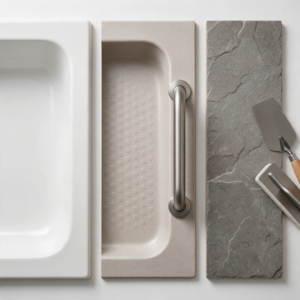
ADA-compliant shower designs typically feature curbless or low-threshold entries that eliminate the need to step over a high barrier. Roll-in showers are particularly popular because they allow wheelchair users to enter directly without assistance.
Many homeowners also choose to install built-in benches or fold-down seating to provide additional comfort and safety during bathing. Handheld showerheads mounted on adjustable slide bars offer greater flexibility and accessibility than traditional fixed showerheads.
Slip-resistant flooring is another essential feature. Wet surfaces contribute to thousands of bathroom-related injuries every year, making proper flooring selection a critical component of any accessibility-focused renovation.
The Importance of Proper Grab Bar Installation
Grab bars are one of the simplest yet most effective safety features in an ADA bathroom remodel.
According to the CDC, approximately one in four adults over age 65 experiences a fall each year. Properly installed grab bars can significantly reduce the risk of slips and falls by providing stability and support during everyday activities.
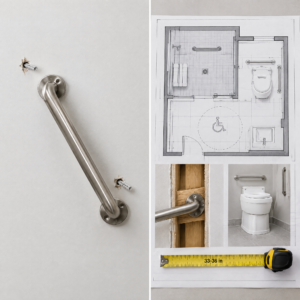
ADA guidelines generally recommend installing grab bars between 33 and 36 inches above the finished floor. Bars should be securely anchored into wall framing and capable of supporting at least 250 pounds.
Around the toilet, grab bars are typically installed on the side wall and rear wall to assist with sitting and standing. In showers, grab bars should be positioned near entrances, seating areas, and locations where users are most likely to require additional support.
Today’s grab bars are available in a variety of styles and finishes, allowing homeowners to maintain an attractive bathroom design without sacrificing safety.
Wheelchair Accessibility Considerations
For wheelchair users, accessibility extends beyond individual fixtures. The overall layout of the bathroom plays a crucial role in usability.
A wheelchair-accessible bathroom should provide clear pathways free from obstructions. Cabinets, vanities, and fixtures should be arranged to maximize maneuverability while maintaining easy access to essential features.
Roll-in showers offer one of the most effective bathing solutions for wheelchair users. Transfer benches, handheld showerheads, and strategically placed grab bars further improve independence and safety.
Storage should also be designed with accessibility in mind. Frequently used items should be located within easy reach, eliminating the need to bend, stretch, or rely on step stools.
Lighting is another important consideration. Bright, evenly distributed lighting improves visibility and reduces the risk of accidents. Motion-activated lights can provide additional convenience, particularly during nighttime use.
Aging-in-Place Bathroom Modifications
Aging in place has become a major priority for homeowners across the country. According to AARP, nearly 90% of adults over age 65 want to remain in their homes as they age.
An ADA bathroom remodel supports this goal by incorporating features that improve safety and independence.
Walk-in showers are among the most popular aging-in-place upgrades because they eliminate one of the most common fall hazards. Comfort-height toilets reduce strain on the knees and joints, while non-slip flooring helps prevent accidents.
Improved lighting, wider doorways, lever-style handles, and accessible storage solutions can further enhance usability and comfort.
Even homeowners who do not currently require accessibility features often choose to incorporate these upgrades during remodeling projects. Planning ahead can help avoid costly renovations later while increasing the long-term value of the home.
How Much Does an ADA Bathroom Remodel Cost?
The cost of an ADA bathroom remodel can vary significantly depending on the scope of the project and the features included.
Basic accessibility upgrades such as grab bars, improved lighting, comfort-height toilets, and handheld showerheads may cost between $5,000 and $15,000.
Mid-range projects that include walk-in showers, non-slip flooring, upgraded fixtures, and layout improvements often range from $15,000 to $25,000.
For homeowners requiring significant structural modifications, wheelchair accessibility upgrades, plumbing relocation, or luxury finishes, a full ADA bathroom remodel can exceed $40,000.
While these costs may seem substantial, many homeowners view accessibility improvements as a long-term investment in safety, independence, and quality of life.
Common ADA Bathroom Remodeling Mistakes
One of the most common mistakes homeowners make is underestimating the amount of space needed for accessibility. Insufficient turning space can make it difficult or impossible for wheelchair users to navigate the bathroom comfortably.
Improper grab bar placement is another frequent issue. Bars that are installed incorrectly may fail to provide the support users need, reducing their effectiveness and potentially creating safety concerns.
Some homeowners also prioritize aesthetics over functionality, selecting fixtures or layouts that look appealing but fail to meet accessibility goals.
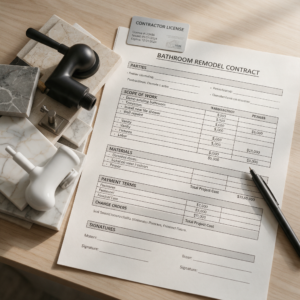
Working with an experienced remodeling contractor who understands ADA guidelines can help avoid these mistakes and ensure the finished bathroom performs as intended.
ADA Bathroom Remodel vs. Universal Design
While ADA standards provide specific measurements and accessibility requirements, many homeowners also embrace universal design principles.
Universal design focuses on creating spaces that are usable by people of all ages and abilities without requiring specialized adaptations. Features such as curbless showers, wider doorways, better lighting, and easy-to-use fixtures benefit everyone, not just individuals with disabilities.
Combining ADA guidelines with universal design principles often results in a bathroom that is both highly functional and visually appealing.
Benefits of an ADA Bathroom Remodel
An ADA bathroom remodel offers benefits that extend far beyond accessibility compliance.
These renovations improve safety by reducing fall risks, increase independence for users with mobility limitations, and support aging-in-place goals. They can also enhance the overall functionality of the bathroom and make daily routines easier and more comfortable.
From a financial perspective, accessibility upgrades can increase home value and appeal to a broader range of future buyers. As the population continues to age, homes with accessible features are expected to become increasingly desirable.
Conclusion
An ADA bathroom remodel is about more than meeting accessibility standards—it’s about creating a safer, more comfortable, and more functional space for years to come. Whether you’re planning for aging in place, accommodating mobility challenges, or simply investing in a smarter bathroom design, accessibility-focused renovations can provide lasting benefits.
From grab bars and wheelchair-accessible layouts to walk-in showers and universal design features, the right modifications can dramatically improve safety, independence, and quality of life. By partnering with an experienced remodeling professional and planning your project carefully, you can create a bathroom that meets your needs today while preparing for the future.
Frequently Asked Questions About ADA Bathroom Remodeling
What is an ADA bathroom remodel?
An ADA bathroom remodel is a renovation designed to improve accessibility, safety, and usability for individuals with disabilities, mobility limitations, or aging-related challenges. It often includes features such as grab bars, walk-in showers, wider doorways, and wheelchair-friendly layouts.
Does the ADA apply to residential bathrooms?
In most cases, ADA regulations do not apply to private single-family homes. However, many homeowners choose to follow ADA guidelines during remodeling projects to create a safer and more accessible bathroom environment.
What are the main ADA bathroom requirements?
Key ADA bathroom requirements include a minimum 32-inch doorway clearance, a 60-inch turning radius for wheelchairs, accessible sink heights, comfort-height toilets, properly installed grab bars, and low-threshold or roll-in shower access.
How much does an ADA bathroom remodel cost?
The cost of an ADA bathroom remodel varies depending on the project’s scope. Basic accessibility upgrades typically range from $5,000 to $15,000, while larger renovations with custom features and layout modifications can exceed $40,000.