
Mobility-conscious bathroom modifications designed to improve safety, comfort, and long-term independence.



Aging-in-place bathroom upgrades are modifications made to improve safety, accessibility, and usability within a home as mobility needs change over time.
These upgrades focus on reducing fall risk, improving maneuverability, and enhancing daily comfort without requiring relocation or major lifestyle disruption.
Unlike full ADA conversions, aging-in-place remodeling is often proactive. It may include barrier-free showers, reinforced grab bars, improved lighting, non-slip flooring, and fixture adjustments tailored to future mobility needs.
When professionally designed, aging-in-place bathroom upgrades enhance independence while maintaining a refined, cohesive aesthetic.
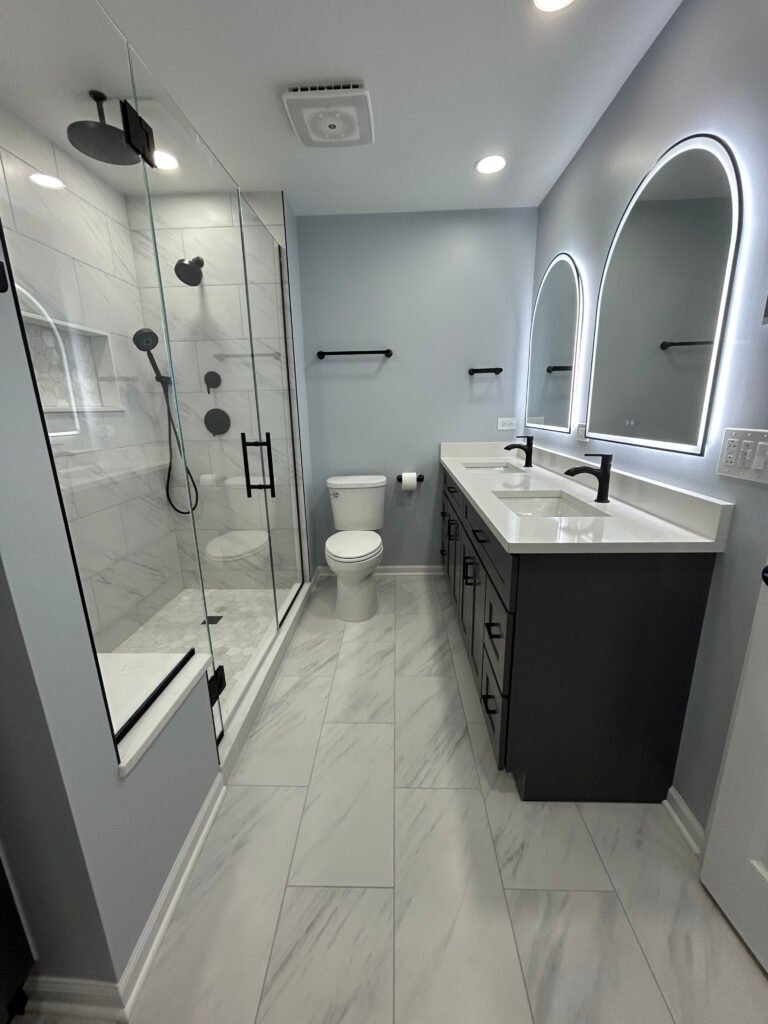
Aging-in-place planning integrates subtle structural adjustments that support changing needs over time.
Our aging-in-place bathroom upgrades may include:
Every project begins with an On-Site Project Evaluation to assess layout feasibility, structural reinforcement opportunities, and long-term planning considerations.
For broader renovation coordination, aging-in-place enhancements can be integrated into a complete Bathroom Remodeling project or aligned with our ADA & Accessibility Bathroom Remodeling services.
Slip-resistant flooring, improved lighting, and reduced step-in thresholds.
Secure anchoring within wall framing to support future stability needs.
Low-entry shower systems with seating options if desired.
Comfort-height toilets and accessible faucet placement.
Improved circulation space for easier movement within the bathroom.
Subtle structural preparation that allows additional modifications later.
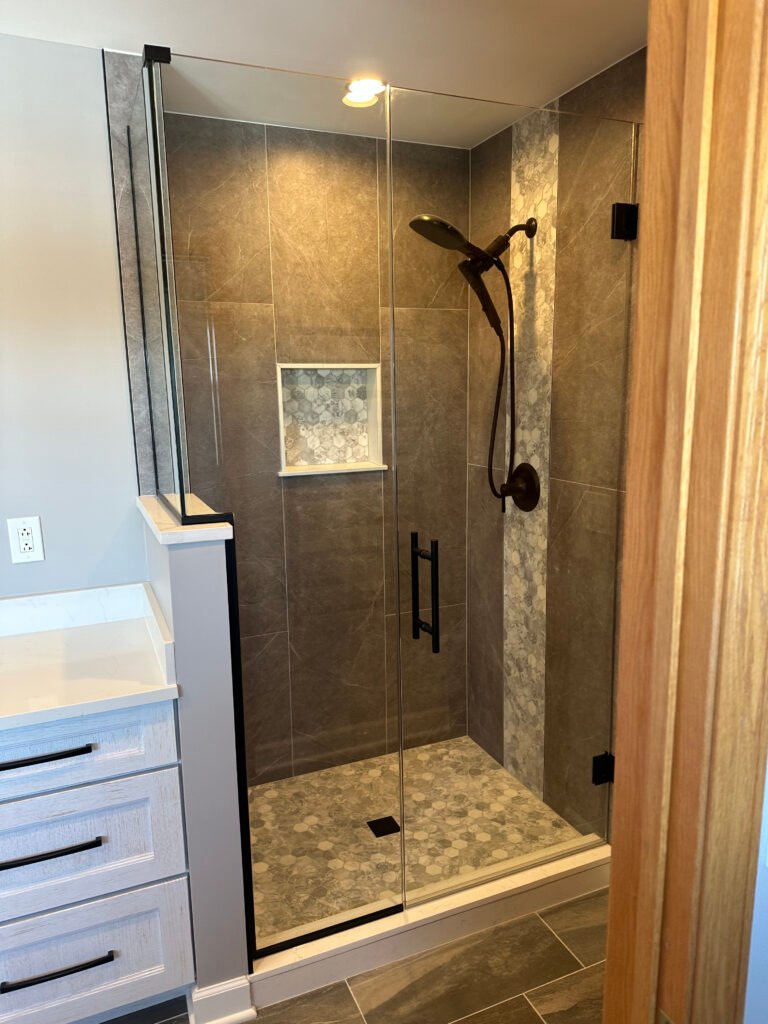
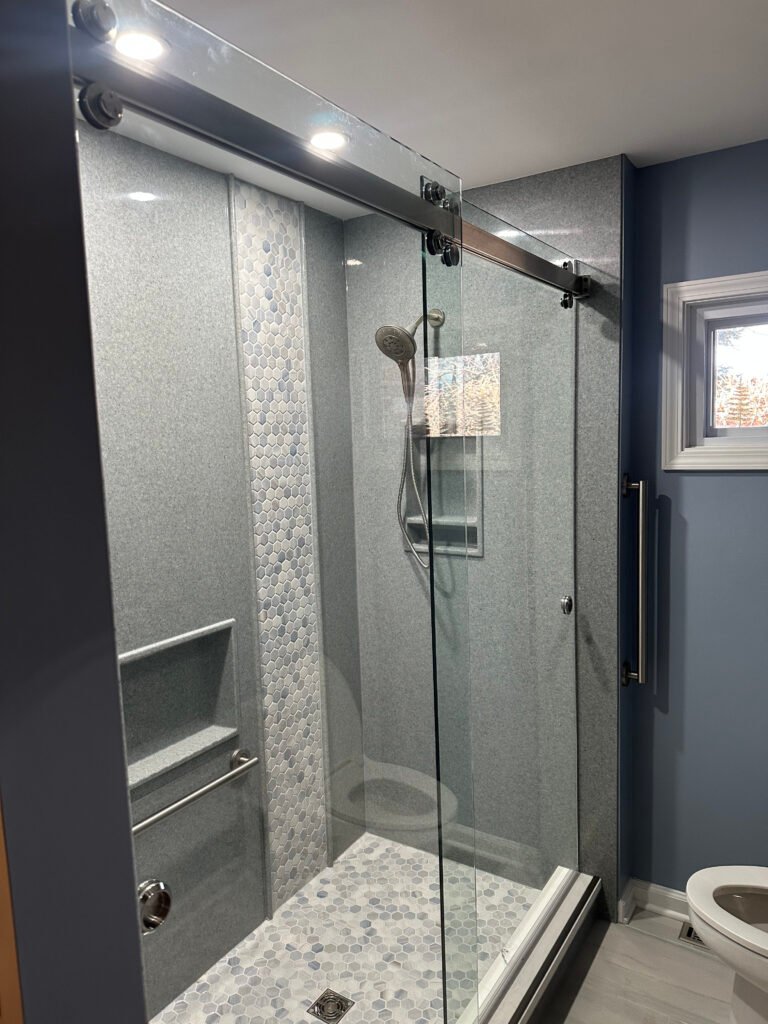
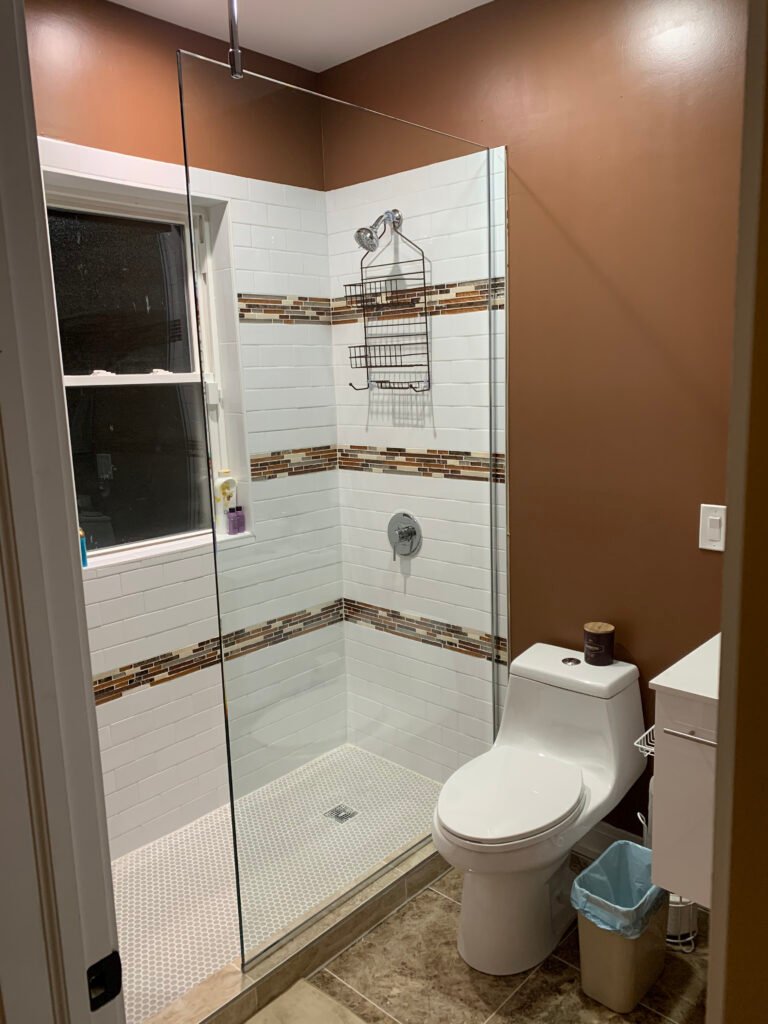
Replacement of traditional bathtubs with accessible walk-in shower systems designed for safer entry and exit.
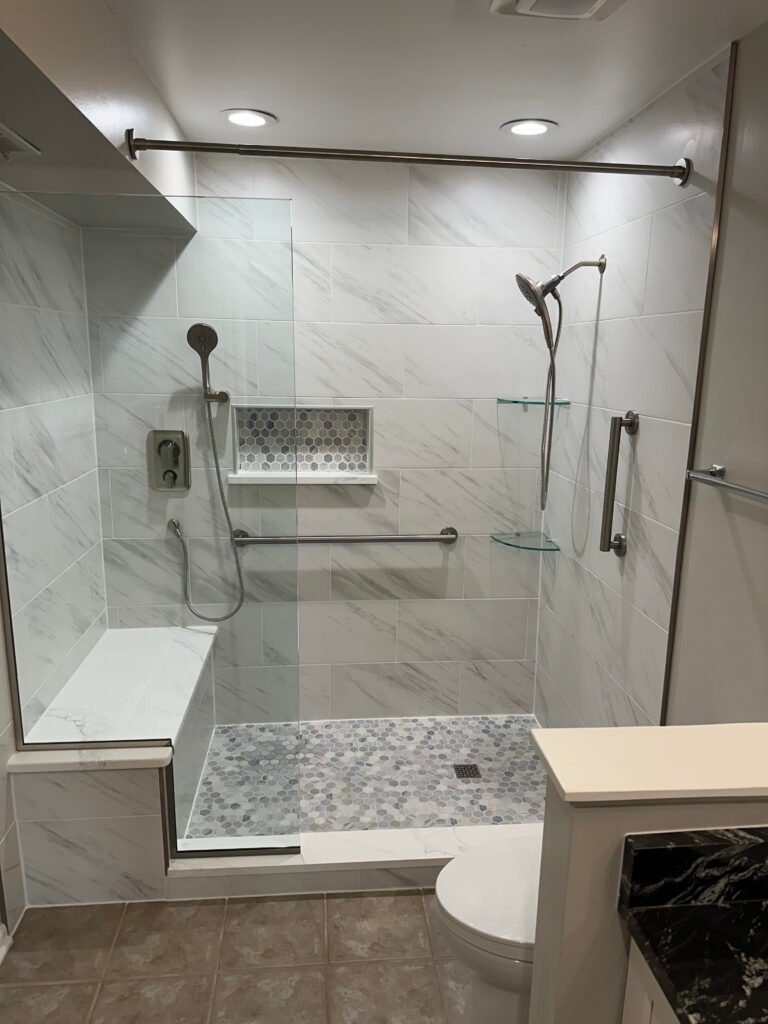
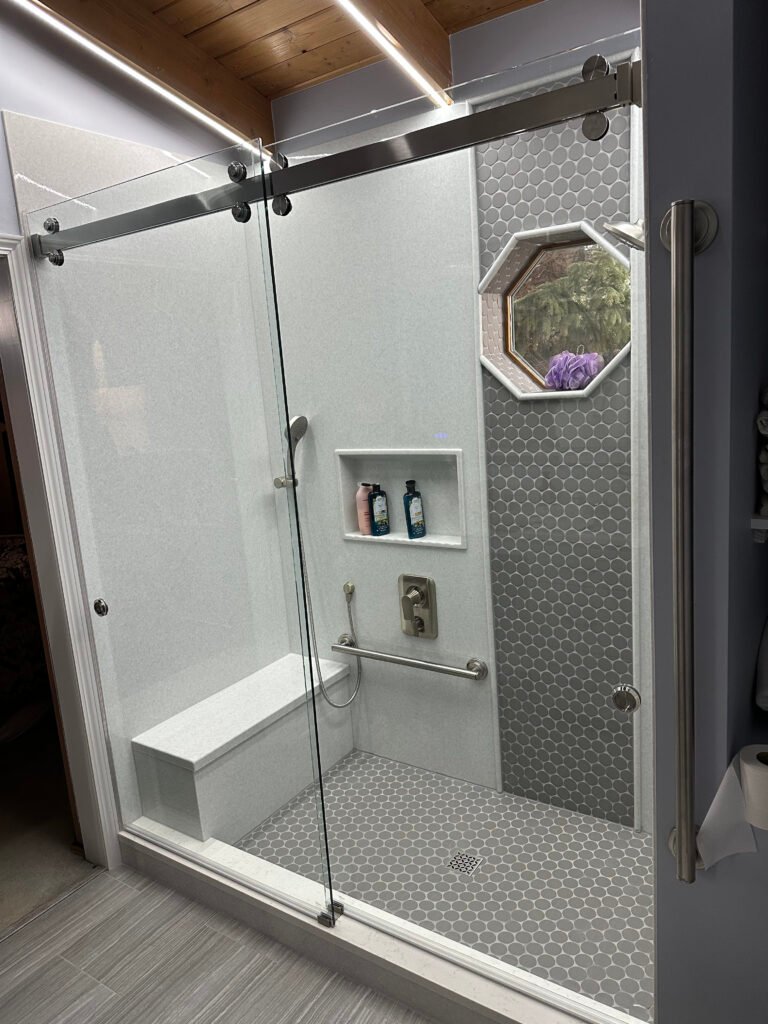
Full layout adjustments and fixture modifications aligned with ADA-conscious design principles.
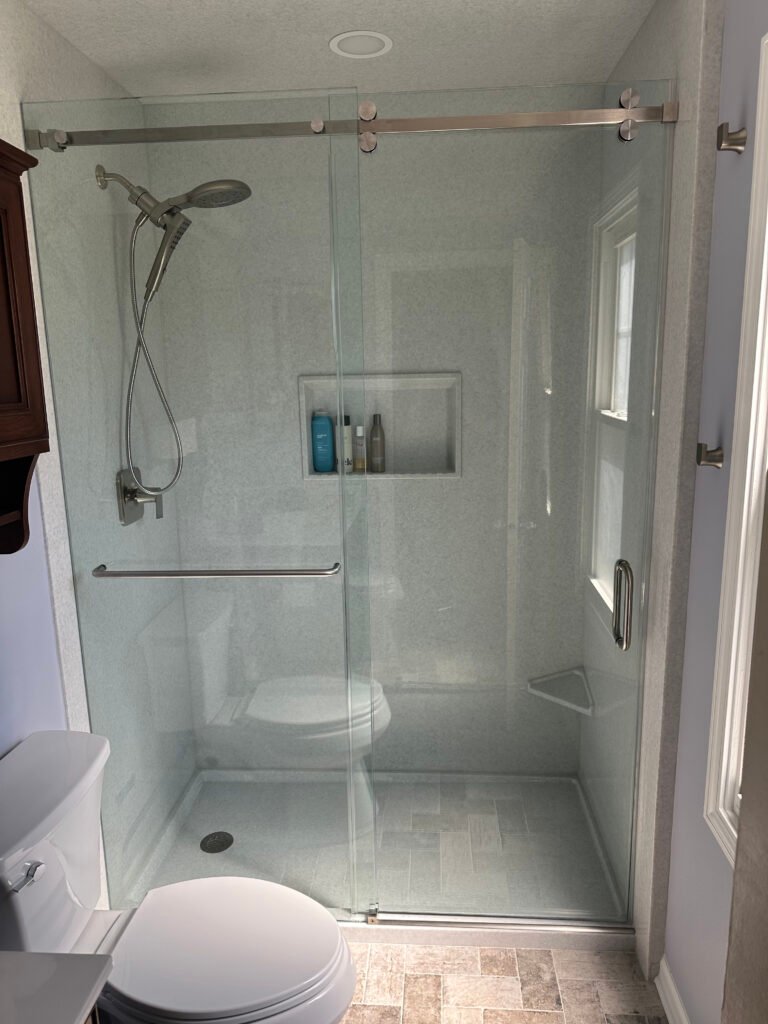
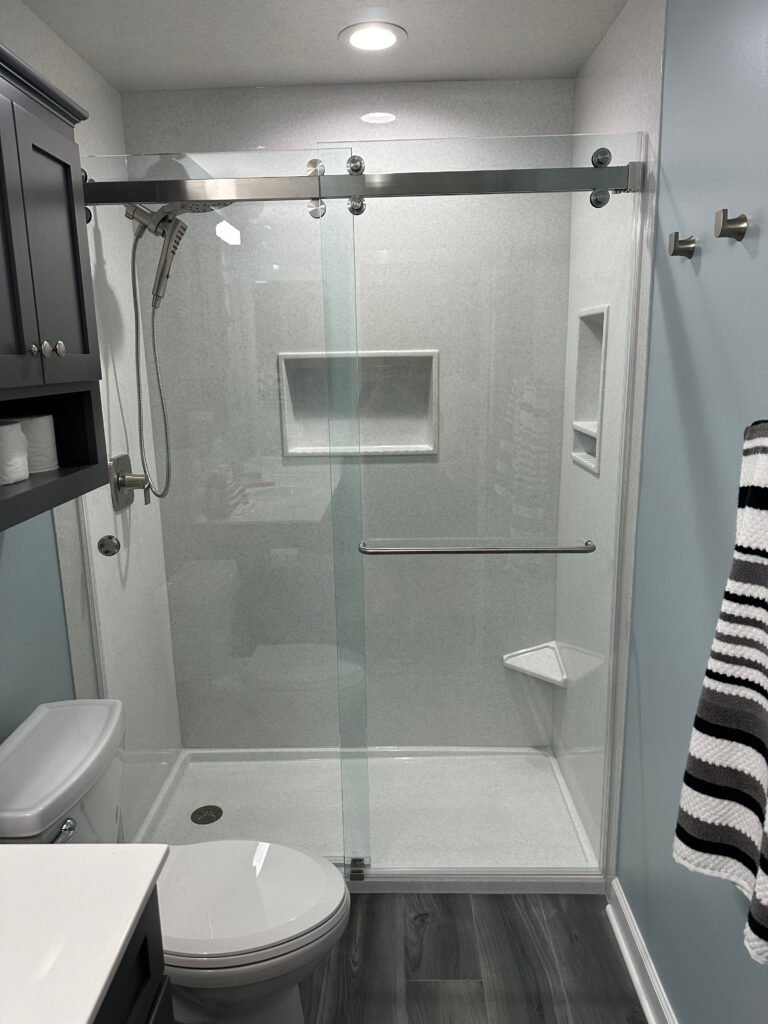
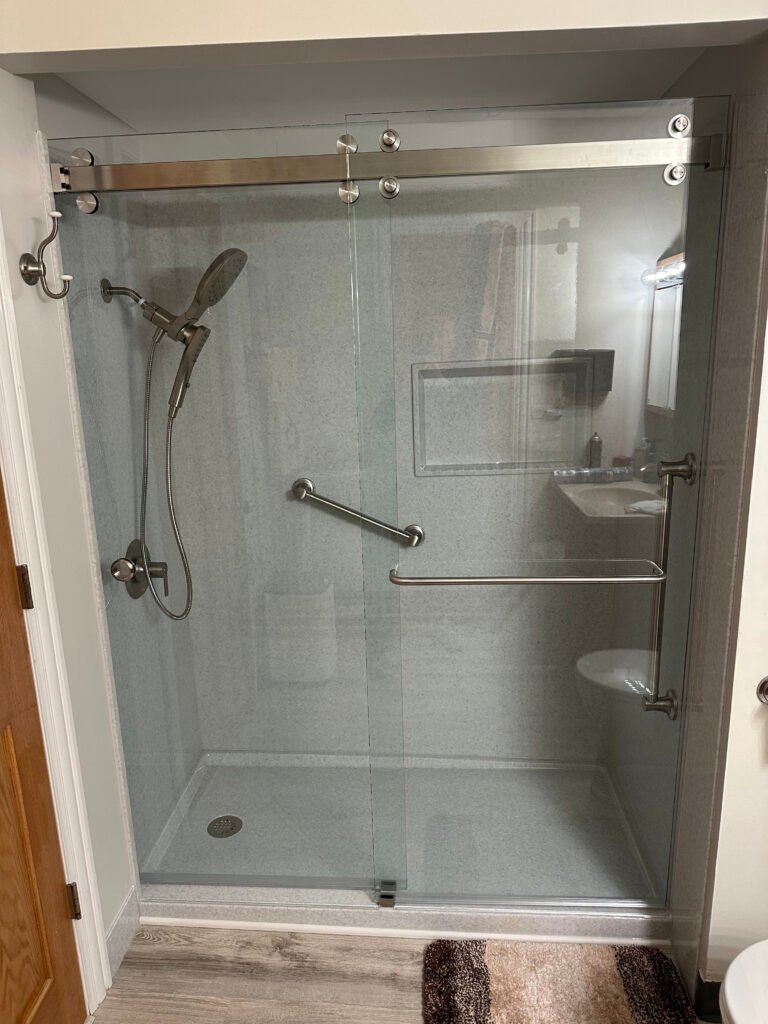
Comprehensive bathroom renovations integrating layout planning and material coordination.
Improperly installed safety features may compromise rather than improve stability.
Common risks include:
Professional aging-in-place remodeling requires:
Safety upgrades must be structurally integrated to perform reliably.
We assess current layout, mobility needs, and structural feasibility.
ADA-conscious bathroom conversions, barrier-free shower systems, and mobility-focused upgrades.
All safety features are installed with reinforced anchoring and moisture-conscious execution.
We verify that layout, fixture placement, and structural components align with design and safety goals.
Aging-in-place upgrades are typically proactive modifications designed for long-term safety in residential settings. ADA remodeling often references specific dimensional guidelines more commonly associated with public or commercial spaces.
No. Aging-in-place modifications can benefit individuals recovering from injury, experiencing temporary mobility limitations, or planning for future needs.
Yes. Safety features can be integrated seamlessly into a cohesive, design-forward bathroom layout.
Not always. Some upgrades are subtle structural reinforcements and fixture adjustments that can be integrated into existing layouts.
Timeline depends on the scope of modifications. A structured evaluation provides clarity before work begins.
If you are planning proactive aging-in-place bathroom upgrades, the first step is a professional evaluation of your space and long-term mobility goals.